Charting Our Sustainable Course: The Carbon Footprint for Organization Project

At Vandapac, we take ownership of our environmental impact. Recognizing our global responsibility, we launched the Carbon Footprint for Organization (CFO) project. This in-depth initiative dissects our greenhouse gas (GHG) emissions across the board, from fuel use and energy consumption to waste management and employee travel.

Imagine the CFO project as a detailed map of our environmental footprint. It pinpoints three key areas, known as scopes:

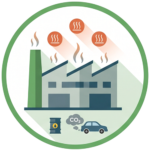
Scope 1

Direct Emissions: These are the GHGs we directly release through our core activities, like fuel combustion from company vehicles and equipment, emissions from wastewater treatment, and unintentional leaks from our operations.

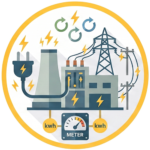
Scope 2

Indirect Emissions from Energy Use: This includes emissions associated with the energy we purchase, like powering our facilities with grid-supplied electricity.

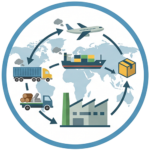
Scope 3

Other Indirect Emissions: These encompass emissions outside our direct control but still within our value chain, such as employee commuting and business travel, or the production and transportation of materials we use.

By closely examining each scope, we identify areas with potential for significant emission reduction. This data fuels our sustainability strategies, allowing us to prioritize targeted initiatives and track our progress towards a greener future.

Our Pathway to Net Zero

Vandapac Co., Ltd. recognizes the urgent need to address climate change and is fully committed to doing business with care for the environment. Since 2017, we have taken real action to reduce our carbon dioxide (CO2) emissions. In 2022, we stepped up our efforts by starting to collect greenhouse gas data and clearly sharing our sustainability strategies and expectations.

To show our true commitment and responsibility to the environment, we have set these clear future targets:
– Reduce CO2 emissions by 47% by 2035, which is an important step in our plan to reduce climate change impacts.
– Become a Net Zero organization by 2050, our ultimate goal that shows our vision for a sustainable, carbon-free society.

We believe that our actions today will build a better and more sustainable future for the next generations.

To reach these goals, we drive our greenhouse gas reduction through 5 main strategies. We focus on using more renewable energy by installing Solar Rooftops on our factory buildings, and promoting a Circular Economy by using Green Materials with 4R strategies, while developing products that are easy to recycle. We also work on Low-Carbon Logistics, improve our production lines to save energy, and study CCUS technology to capture and store carbon—all to create a sustainable future and hand over a better world to the next generation.

VANDAPAC GHG EMISSION TARGET

2017

Start action to reduce CO2 emission

2022

Collect CO2 Emission and communicate strategy & expectation

2035

-47% CO2 Emission

2050

Net Zero

REDUCING GHG EMISSION STRATEGY

We are committed to minimizing our environmental footprint through five strategic pillars. By harnessing the power of the sun with Rooftop Solar energy, we tap into renewable resources to power our operations. We drive a Circular Economy and plastic resource circulation by integrating Green Materials, executing the 4R Strategy (Reduce, Reuse, Recycle, Renewable), and developing products engineered for a recycling-oriented society. Efficiency is further embedded across our entire supply chain through Low-Carbon Logistics and Innovative Process Optimization to drastically reduce energy usage. Ultimately, our future-forward dedication includes utilizing cutting-edge CCUS Technology to neutralize emissions, ensuring all aspects of Vandapac’s operations contribute to a highly sustainable future.

RENEWABLE ENERGY: SOLAR ROOFTOP
CIRCULAR ECONOMY & PLASTIC RESOURCE CIRCULATION
LOW-CARBON LOGISTICS
INNOVATE PROCESSES OPTIMIZE & REDUCE ENERGY USAGE
UTILIZING CCUS TECHNOLOGY

VDP 2025 EMISSION

Scope 1 : tCO2e (1.60 %)
0
Scope 2 : tCO2e (19.32 %)
0
Scope 3 : tCO2e (79.08%)
0
Scope 1
GHG  emissions  associated  with activities  and sources that the reporting organization owns or directly controls, such as fuel use and refrigerant leakage.
Scope 2
Indirect greenhouse gas emissions from purchased electricity used within the organization.
Scope 3
Other indirect greenhouse gas emissions resulting from activities across the entire value chain, both upstream and downstream, such as raw material procurement and product delivery.

** 5 % Materiality